
Scholarship applications are now open for students wishing to study in China
The ABCF and the Barbados-China Returned Students Association have set up a resource group of current and past students who are able to assist you with the application process for Chinese scholarships, and with all aspects of preparation for study in China. If you are considering study in China, we would love to hear from you, by email or by WhatsApp at 1 246 288 1356. You may also reach us via the Contact page on our website.
A list of available scholarships follows, with links where you may find full information on the application process for each.
Chinese Scholarships
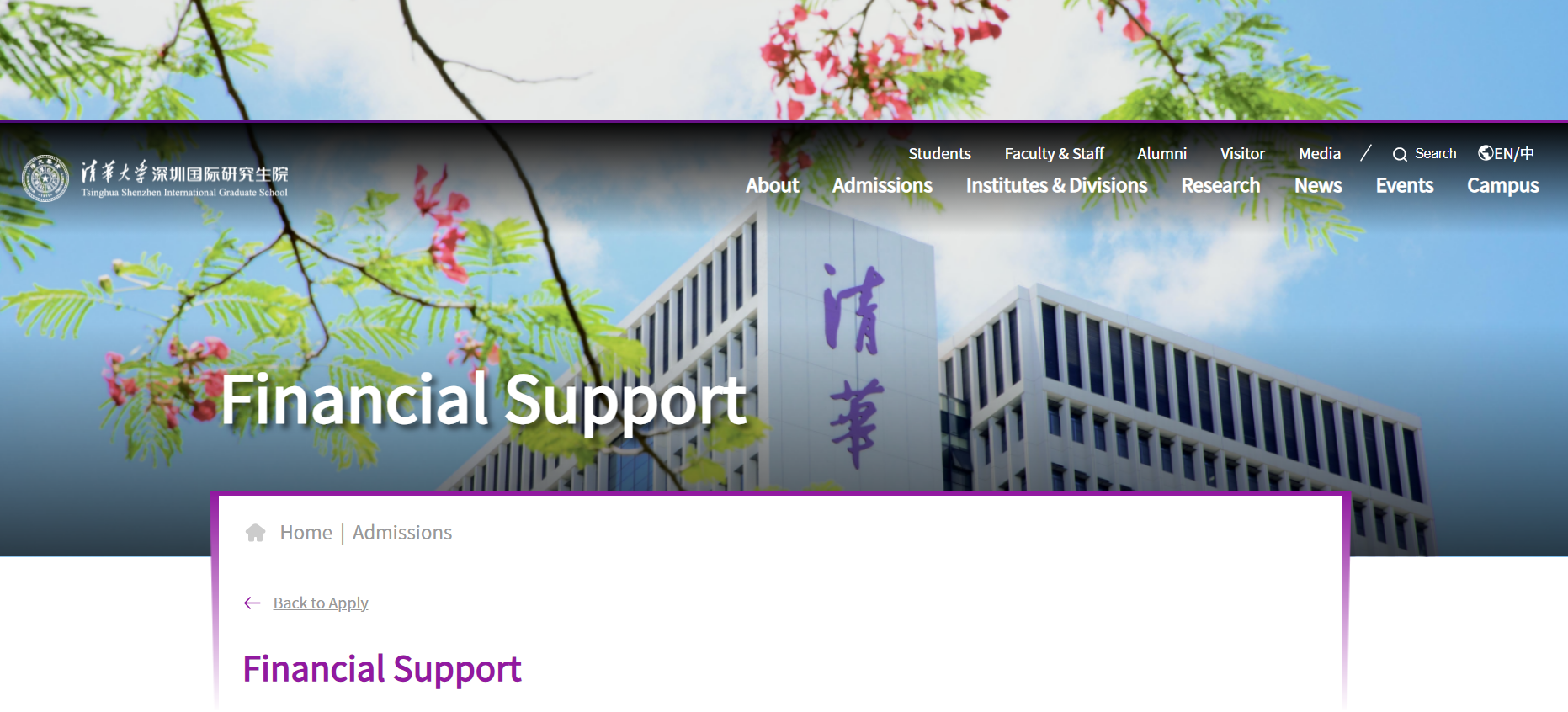
https://www.sigs.tsinghua.edu.cn/en/7409/list.htm
https://www.gjxy.zjut.edu.cn/index.php/en/scholarship/zjut-full-scholarship
https://www.gjxy.zjut.edu.cn/index.php/en/scholarship/zhejiang-provincial-government-scholarship
https://www.gjxy.zjut.edu.cn/index.php/en/scholarship/zjut-scholarship
Hong Kong’s first Chinese medicine hospital opens to popular demand | South China Morning Post
Hong Kong’s first Chinese medicine hospital has opened its doors to patients, with subsidised general outpatient services for the first month fully booked, prompting the facility to add extra slots to meet demand.
The Chinese Medicine Hospital of Hong Kong, located in Tseung Kwan O, aims to provide services for more complex cases under a model that features Chinese medicine as the primary approach, integrated with Western medicine.
“We hope to bring the development of Chinese medicine in Hong Kong to the world and establish a more solid foundation,” said Wong Kwai-huen, chairman of the hospital’s board of directors.
A Chinese woman escaping from a high-rise flat, reportedly to avoid being caught by her lover’s wife, has gone viral online.
Video footage showed her scaling the building’s exterior walls and water pipes while wearing a miniskirt.
The death-defying scene has shocked people on mainland social media.
The incident took place on November 30, at a residential complex in Guangdong province, southern China.
The post-2000 generation in China: A social mentality perspective
The article looks at the social mindset of China’s post-2000 cohort from several angles, including self-confidence, views on employment, attitudes toward life, information habits, social interaction, and consumption patterns. I think it’s worth sharing here. Since the piece is fairly long, I haven’t translated the final section on policy responses — if you’re curious, the original is available online.
At its core, the article argues that the social mentality of China’s post-2000 generation resists simple labels. It is shaped by overlapping tensions—between confidence and anxiety, stability and mobility, competition and withdrawal, private feeling and public concern. Growing up amid China’s rapid rise and deep digitalization, this cohort combines strong national and cultural confidence with unease over economic uncertainty and shifting values.
Rather than portraying them as either disengaged or relentlessly driven, the author shows how contradictory orientations coexist: pragmatic career planning alongside experimentation, the pursuit of “small but certain happiness” alongside concern for fairness and social justice. The article also highlights the internet’s dual role in empowering and enclosing digital natives, shaping their emotional lives, consumption choices, and search for a workable definition of a “good life” that balances individual dignity with social progress.
The Chinese Hukou system, all but obsolete? - by Yang Liu
Household registration, or the hukou system, has long been a hallmark of China’s social management model, to which people’s social status, access to welfare, and educational opportunities are tied.
Due to seismic demographic and economic shifts in Chinese society over the past few decades, the hukou system has been loosening its grip, according to a new study by two economists based on a quantitative analysis of reforms between 1996 and 2024.
The study finds that the overall “hukou threshold” across 332 Chinese cities has fallen to 12.6 percent, down from 98.8 percent in 1999. In other words, on average, Chinese cities now block just over one-tenth of would-be hukou holders from obtaining local registration. This suggests that Chinese people are freer than ever to move around the country for work or other purposes, and that the ongoing erosion of hukou barriers is likely to continue in the foreseeable future.
Cai Fang on Beijing's income equality playbook
Cai acknowledges that China’s income distribution remains under strain and argues that policymakers should treat measurable progress on key indicators such as the Gini coefficient as explicit policy targets and levers in policy action. In practical terms, that means tougher labour protections and stronger wage-setting institutions to lift the labour share; more active use of tax, social security, and the wider social safety net to trim the Gini; and a mix of encouragement and tighter regulation for philanthropy and other “tertiary distribution” channels to foster “a social ethos oriented toward the public good”—so that, in Deng Xiaoping’s famous formulation, those who get rich first can inspire and help others to become rich later, advancing common prosperity for all.
A female bodyguard, assigned by the Chinese government to protect the French first lady during her official visit with her husband to China in early December, went viral on social media for her tough and professional demeanour.
Known by her pseudonym, Yan Yuexia is referred to by Chinese internet users as “the most beautiful bodyguard,” although her appearance is one of many strengths, as reported by the news portal The Paper.
Nigel Slater, former pro-vice-chancellor of the University of Cambridge and a distinguished figure in chemical engineering and biopharmaceuticals, has officially embarked on a new chapter in China’s rapidly rising biomedical frontier.
The veteran academic, who spent over three decades shaping science and innovation at Cambridge, has joined Zhejiang University in Hangzhou as part of a strategic move fuelled by both personal ambition and global scientific realignment.
Plate expectations: why China’s pre-made meal boom is hard to swallow | South China Morning Post
They promise consistency, cost savings and the speed demanded by modern life. But in a culture that reveres freshness and the wok hei benchmark for Chinese dishes, the rapid rise of industrially processed pre-made meals has stirred a heated debate – and simmering anger.
The recent public outcry has been driven not by food safety fears, but by a perceived lack of transparency.
Diners at restaurants are increasingly incensed about paying premium prices for reheated factory packets served without disclosure – a practice many view as a breach of trust. At its heart, the controversy represents a collision between China’s ancient culinary identity and the cold efficiency of our industrial age.
A research project about changes in family life over three generations has found that traditional values still play a key role in sexual relations in China, and women often struggle amid tensions between old and new.
One of the areas of conflict is what researcher Liu Jieyu has called a “virginity battle”.
Influenced by Western liberal attitudes, many younger Chinese men are open to premarital sex, and they often pressure their girlfriends to have sex while dating, according to Liu’s new book, Embedded Generations: Family Life and Social Change in Contemporary China, published on November 25.
Parents were initially perplexed by daughter’s unusual appearance, even questioned whether hospital had given them the wrong baby at birth.
This weekly newsletter is put together by DeLisle Worrell, President of the ABCF. Visit us at Association for Barbados China Friendship | (abcf-bb.com).
Thanks to everyone who sent contributions for this week’s Update. Please send items of interest to me via the contact page at ABCF-BB.com or to info@DeLisleWorrell.com
The ABCF mission is to build a deeper understanding between the Chinese people and Barbadians and Caribbean people from all walks of life. The association’s focus is on personal experiences, people-to-people contact, cultural exchanges and exchanges of ideas, and the facilitation of travel, business and study. From the outset we aim to learn from and build on the experiences of the Caribbean and China, and to develop mutual understandings and support that will be to the benefit of both sides.