
How is China advancing opening up through its key gateway in Hainan?
At the bustling crossroad of the Pacific-Indian Ocean trade, China is launching an ambitious trial of opening up.
On Dec. 18, Hainan Free Trade Port (FTP), the largest free trade zone in the world, will implement its latest island-wide customs operations….
The upcoming customs operations will turn Hainan into a distinct regulatory zone, separated from the mainland under the principle of “freer access at the first line, regulated access at the second line, and free flows within the island.”
The “first line,” linking Hainan with overseas markets, will allow most imported goods to enter tariff-free with faster clearance, while the “second line,” referring to the customs boundary between Hainan and the mainland, will apply standard customs oversight to ensure a fair environment and prevent smuggling.
Why China's Hainan Free Trade Port Matters - by Jiang Jiang
How big is the Hainan FTP?
At 33,900 square kilometers, it is 31 times the size of Hong Kong and 47 times that of Singapore, making it the world’s largest free trade port by area, according to National Business Daily, a nationwide Chinese financial and economic daily newspaper….
Service trade remains a bottleneck. Although Hainan has a negative list for service trade, it still contains around 70 restrictive measures. Compared with CPTPP or even RCEP standards, gaps remain. During the 15th Five-Year Plan period, breakthroughs in this area will be crucial.
— 赵晋平 Zhao Jinping, Vice Chairman of the China Association of Trade in Services
Hainan FTP: China's solution amid deglobalization headwinds - CGTN
…As one of the world's most populous nations and the second largest economy, China requires an FTP that integrates both market access and institutional innovation. Hainan is therefore not only a gateway for deeper integration with the global economy, but also a showcase of an institutional approach to modernization….
The island-wide special customs operations are more than a regional event. They are a lens through which to observe China's future and emerging patterns of globalization. They are also key to understanding the shifts in the Asia-Pacific and global economic landscape over the coming decade.
Zhao Shukai: Ghostwriters of Reform
Behind China’s big policy documents and set-piece speeches stands an anonymous guild of wordsmiths whose drafts have nudged the course of reform as surely as any the leaders who sign them. One of them, veteran rural-policy insider Zhao Shukai, looks back on four decades in the engine room of official document writing to reflect on what it means to “dance in shackles”: how good documents are really made, where they go wrong, and why the people who write them must answer not only to their leaders, but also to history.
Zhao Shukai (赵树凯; b. 1959) is a Chinese official of rural policy and governance. From 1982 to 1989, he worked at the Rural Policy Research Office of the Communist Party of China Central Committee’s Secretariat (later reorganised as the State Council’s Rural Development Research Centre and subsequently the Research Centre of Rural Economy under the Ministry of Agriculture and Rural Affairs). Starting in 1990, he served at the Development Research Centre of the State Council, China’s government cabinet, holding roles including Director General of the Rural Department’s Organisation Research Office and Director General of the Information Centre.
He held short-term visiting positions at the Australian Centre on China in the World (CIW), The Australian National University (ANU) (Jul 1996–Jan 1997); Universities Service Centre for China Studies, The Chinese University of Hong Kong (CUHK) (May–Jul 1998); Asian/Pacific Studies Institute (APSI), Duke University (Jul 2000–Jul 2001); Fairbank Center for Chinese Studies, Harvard University (Jul 2001–Jul 2002); Harvard-Yenching Institute, Harvard University (Sep 2010–Feb 2011); and the University of Tübingen, Germany (Sep 2012–Jan 2013). He also completed an executive education programme in public management at Harvard Kennedy School (Jun–Sep 2003; Jun–Sep 2008) and an executive education programme at Cambridge Judge Business School, University of Cambridge (Jul 2007).
China’s Rural Reform: A History Not Designed but Discovered
Zhao Shukai (赵树凯; b. 1959) is a Chinese official of rural policy and governance. From 1982 to 1989, he worked at the Rural Policy Research Office of the Communist Party of China Central Committee’s Secretariat (later reorganised as the State Council’s Rural Development Research Centre and subsequently the Research Centre of Rural Economy under the Ministry of Agriculture and Rural Affairs). Starting in 1990, he served at the Development Research Centre of the State Council, China’s government cabinet, holding roles including Director General of the Rural Department’s Organisation Research Office and Director General of the Information Centre.
The following article, originally published on 23 November on the WeChat blog 沽河虎山 (likely Zhao’s personal WeChat blog), offers a candid reflection on the futility of trying to control history from above: what began as a carefully designed collective vision for agricultural reform in the late 1970s quickly morphed into a series of unintended policy “accidents.” The shift from state-controlled communes to household-based farming emerged not from top-level planning, but from local initiatives and grassroots innovation, highlighting that the true agents of change were the farmers, not Beijing’s leaders. Senior leadership’s planning, disconnected from the realities of those affected, ultimately betrayed “a profound lack of respect” for the very people the reforms aimed to serve
Does a weak social safety net hold back private consumption in China? | PIIE
Many experts see China's economy as constrained because of a weak social safety net, especially the retirement system, resulting in anemic domestic consumption spending. This view is out of date. Recent data indicate that China has expanded many parts of its social safety net and that consumption spending has accelerated.
Czin, Jonathan, China against China, Foreign Affairs, November 1, 2025
… the painful irony for the US is that under President Xi China’s opaque polity… has proved adept at frankly acknowledging many of its weaknesses and taking steps to remedy them - arguably even more adept … than the American system…
China’s most glaring weaknesses are side effects of four decades of economic reform … indecision, corruption and dependence on other countries (Page 125).
Reform brought economic growth and geopolitical breathing room but also corruption, iniquity and inequality. No single sector more illustrates China’s interwoven political and economic dysfunction than real estate… (Page 128).
The arc of China's real estate sector illustrates the dynamics at the heart of China's reform efforts. Even when China's leaders pass a much needed reform … they create nearly as many problems as their solve (Page 129).
Xi has dispensed with Deng’s low key foreign policy of “hide and bide” (Page 131).
…Xi’s centralized system of control has so far been able to alter course when needed…[Xi has] an intuitive understanding that everyone around him has an incentive to tell him what he wants to hear…. he has installed confidants who can tell him the truth in discreet ways (Page 133).
Wang Ou: Migrant workers, after the honeymoon
Sociologist & child of migrant workers shares stories of young migrant workers through marriage and parenthood—and finds where everyday lives collide with urban rules.
… China’s urban institutions welcome these young migrants as labour, not as families. Once children arrive, the barriers harden: homeownership becomes the ticket to school places, access to public services hinges on rigid eligibility rules, and education—supposedly the great escalator—too often channels rural children into lower-tier tracks. For migrant families willing to spend almost anything on their children’s futures, the system offers more places, but fewer ladders.
Wang follows these lives across multiple sites—workplaces, dormitories, and migrants’ home counties—and shows what that exclusion does to family strategies, gender roles, and emotional life.
China is no longer using American software to run its power grid.
The Southern Regional Electricity Market (SREM) – the world’s largest unified power market – has switched fully to Tianquan, a solver developed by Chinese engineers with speeds 14 per cent faster than American products, according to a report by the official Science and Technology Daily.
It follows recent reports that the State Grid, Huawei and many other leading Chinese companies have abandoned US solvers. If China no longer needs US code to run its critical systems, other nations may follow – from Southeast Asia to Latin America – and the global balance of technological power will shift.
China’s post-90s generation says no to liberal democracy, confounds West | South China Morning Post
Chinese who came of age during the country’s economic boom are less supportive of liberal democratic values than older generations, a study has revealed, contradicting the predictions of Western policymakers and academics.
The study by researchers based in China and Britain found that Chinese people born after 1990 were “less likely to support democratic values than the older generation”, despite greater economic security and “a higher level of post-materialist values”.
Their findings were published online by the Journal of Contemporary China on Sunday.
China offers more support to returning overseas students as influx grows | South China Morning Post
hina has launched a national-level service platform to help returning overseas students find work and start businesses, as the country steps up its efforts to attract talent and the number of returnees surges.
The Ministry of Education has partnered with 50 organisations to provide returnees with entrepreneurial mentors and match them directly with local government and corporate needs.
The measures show the value of overseas returnees is still recognised at the national level, despite recent scepticism in public discourse about the worth of studying abroad, according to Zheng Jinlian, vice-president of the Beijing-based think tank Centre for China and Globalisation.
Wife who looks after son with extremely rare illness alone turns man’s infidelity with escort girls, porn actresses into manga art.
Reminder: Scholarship applications are now open for students wishing to study in China
The ABCF and the Barbados-China Returned Students Association have set up a resource group of current and past students who are able to assist you with the application process for Chinese scholarships, and with all aspects of preparation for study in China. If you are considering study in China, we would love to hear from you, by email or by WhatsApp at 1 246 288 1356. You may also reach us via the Contact page on our website.
A list of available scholarships follows, with links where you may find full information on the application process for each.
Chinese Scholarships
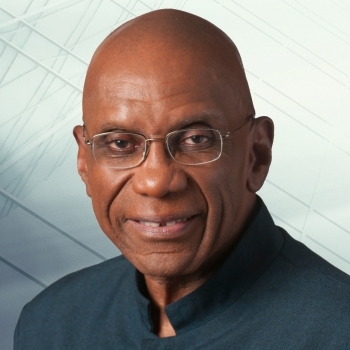
This weekly newsletter is put together by DeLisle Worrell, President of the ABCF. Visit us at Association for Barbados China Friendship | (abcf-bb.com).
Thanks to everyone who sent contributions for this week’s Update. Please send items of interest to me via the contact page at ABCF-BB.com or to info@DeLisleWorrell.com
The ABCF mission is to build a deeper understanding between the Chinese people and Barbadians and Caribbean people from all walks of life. The association’s focus is on personal experiences, people-to-people contact, cultural exchanges and exchanges of ideas, and the facilitation of travel, business and study. From the outset we aim to learn from and build on the experiences of the Caribbean and China, and to develop mutual understandings and support that will be to the benefit of both sides.