
BRICS and Global South: Multilateralism, development and shared future - CGTN
The 18th BRICS Summit, held in New Delhi on September 12–13, 2026, marks an important milestone in deepening South-South cooperation and advancing global governance toward a more equitable model that is more responsive to the needs of developing countries. Against an international landscape characterized by growing complexity and rapid transformation, BRICS continues to demonstrate its capacity for adaptation and integration in pursuit of common progress….
A central pillar of the BRICS and Global South agenda is the transition toward low-carbon development, guided by the concept of ecological civilization and long-term sustainability….
n this area, pragmatic cooperation is being translated into concrete action: Joint development of clean-energy infrastructure, including solar, wind and hydropower; the modernization of electricity grids; and the promotion of sustainable mobility through new energy vehicles. By democratizing access to green technologies and facilitating international financing through institutions such as the New Development Bank, BRICS demonstrates that environmental protection and sovereign industrialization are not mutually exclusive objectives, but complementary drivers of common prosperity.
Where China–India Relations Stand Today - by Jiang Jiang
This episode of Inside the China Room with Jiang Jiang, I’m joined by Mike Liu (刘宏), VP & Senior Fellow at the Center for China and Globalization, or CCG, a leading non-governmental think tank based in Beijing.
Mike is also an accomplished business executive with more than 30 years of experience in hi-tech industry with leading multinational corporations. His career has taken him across Greater China, the United States, Singapore, and India.
In this episode, Mike assesses the current state of China–India relations against the backdrop of this year’s BRICS Summit in India, and explains why the relationship matters far beyond the two countries. Drawing on his experience in India’s technology sector, he discusses whether India’s outsourcing-led IT model can adapt to the AI era and how the different strengths of China and India may shape their interactions in the field. He also talks about trade and economic ties, the visa imbalance, the need for more firsthand exchanges, and China’s engagement with South Asia and other neighboring regions.
The Most Argued-About Dam in the World - by David Fishman
I work in the power sector. I have lived in China for 15 years. I visit the province where the dam is several times a year to visit in-laws. And yet…until just a few months ago, I had never been to the dam.
Thankfully, I have now corrected that, as part of my recent trip to Yichang (catch up on that visit here).
The 3GD is a very cool site visit. Aside from being a massive hydroelectric generation and flood control facility, it’s also a national 5A tourist attraction with multiple onsite museums. With free entry and just 35 CNY for the (mandatory) shuttle bus, it’s also cheap, and total worth a visit if you happen to find yourself in central China. Here’s how I got here, what I saw, and what I thought
Michael Jinghan Zeng: Inside a Confucius Institute
The following excerpt focuses on the people who actually keep Confucius Institutes running.
Western political and media narratives sometimes portray Confucius Institute staff as politically vigilant operatives carrying out Beijing’s agenda abroad. Zeng’s account of Lancaster University offers a rather different — and considerably more mundane — picture: British administrators who may know little about China when they take the job; Mandarin teachers recruited from very different professional backgrounds; constant staff turnover; arguments over teaching hours; visa paperwork, budgets, event flyers, farewell cards, and the occasional accidental map of China without Taiwan.
Why English keeps returning to China’s culture wars
The argument is familiar because versions of it surface every few years. Sometimes the complaint is about English’s weight in the gaokao. Sometimes it is about years spent memorising vocabulary that students may never use. Sometimes it becomes a cultural grievance: why should Chinese children work so hard at English when so few Western children learn Chinese? China’s English teaching is often inefficient, and there is nothing unreasonable about debating how much time schools should devote to it. But the regularity with which the argument returns suggests that something else is bothering people.
For much of the reform era, English was part of the price of admission to a world from which China wanted knowledge, technology, investment and opportunity. Scientists needed it to read and publish internationally; officials and scholars used it to deal with foreign counterparts; companies needed it as they moved abroad. Millions of Chinese students spent years learning a language that Americans and Britons acquired without effort. That asymmetry was real, and easier to accept when China was plainly poorer and trying to catch up.
It feels different when the country doing the learning is the world’s second-largest economy, dominates large parts of global manufacturing and increasingly speaks of civilisational confidence. The old arrangement can begin to look less like practicality and more like hierarchy. Why, some Chinese ask, should their children still spend so much effort mastering the language of countries China has already surpassed in some fields?
That is where a sensible argument about education can turn into one about national dignity. Complaining that English is badly taught is not the same as believing it should matter less. Nor is criticising exam-heavy instruction the same as treating the language itself as a residue of cultural submission. The phrase “worshipping foreign things” matters because it shifts the question from usefulness to loyalty.
Yet irritation with a linguistic hierarchy does not make it disappear. English remains useful because too much of the world already operates through it. Its position was built on Anglo-American power, but it now rests just as much on accumulated habit, institutions and network effects. China may reasonably expect its own rise to make Chinese more valuable internationally. But that process will depend on foreigners having stronger reasons to learn Chinese, not on Chinese people deciding in advance that English ought to matter less.
The Internet’s Lost Promise of Freedom
For most of the past two decades, the assumption baked into how we talked about the internet was that it would push power downwards. Social media would route around gatekeepers, information would be harder to control, and citizens would end up with more leverage over states than they had before. The Arab Spring seemed to confirm it.
That is not the world we are living in now. What we have instead is a steady consolidation of control by states, and by a small number of companies that increasingly find it easier to work with states than constrain them. And sitting beneath both of them, weaker than it has been in a long time, is civil society.
My guest for this episode of The Great Power Show is Prateek Waghre, who has spent years working on technology policy in India and thinking about how information moves, who shapes it, and who gets to decide what stays up. He describes the current scenario as an inverted triangle: states and companies at the top, society at the bottom, and a balance that has tipped decisively in the wrong direction over the past five years.
Hong Kong is mourning the death of Tung Chee-hwa, the city’s first leader after its return to Chinese sovereignty and a respected elder statesman, who died on Tuesday at the age of 89.
Tung was surrounded by his family when he “passed away peacefully” at 9.57pm, according to state news agency Xinhua.
Tributes and messages of grief poured in on Wednesday from across Hong Kong and mainland China, as well as from overseas, with top officials, politicians, business leaders and others praising his pioneering role as the first steward of the “one country, two systems” policy.
Yin Yue, a mother with a 15-year-old daughter, feels like after-school academic tutoring is everywhere again in Guangzhou, the city where she lives in southern China.
Five years ago, China launched a sweeping crackdown that drove much of the industry out of sight. But prep centres had quietly begun popping up again in popular commercial areas across the city, said Yin, a pharmaceutical sales manager in her 40s.
In Guangzhou’s shopping malls, these centres are now among the busiest tenants, pulling in crowds of parents and schoolchildren on weekends and weekday evenings, according to Yin. During the summer and winter holidays, they sometimes get so busy that nearby shops and restaurants see an uptick in business.
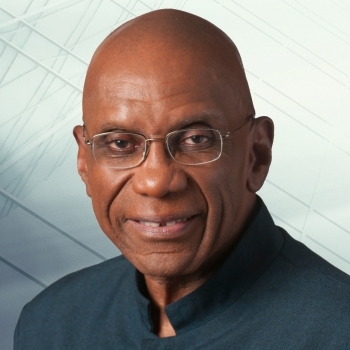
This weekly newsletter is put together by DeLisle Worrell, President of the ABCF. Visit us at Association for Barbados China Friendship | (abcf-bb.com).
Thanks to everyone who sent contributions for this week’s Update. Please send items of interest to me via the contact page at ABCF-BB.com or to info@DeLisleWorrell.com
The ABCF mission is to build a deeper understanding between the Chinese people and Barbadians and Caribbean people from all walks of life. The association’s focus is on personal experiences, people-to-people contact, cultural exchanges and exchanges of ideas, and the facilitation of travel, business and study. From the outset we aim to learn from and build on the experiences of the Caribbean and China, and to develop mutual understandings and support that will be to the benefit of both sides.